
How to Reduce Manufacturing Costs with Optimized PCB Design Services
 Wrirten by
Manaam Rehan
Wrirten by
Manaam Rehan
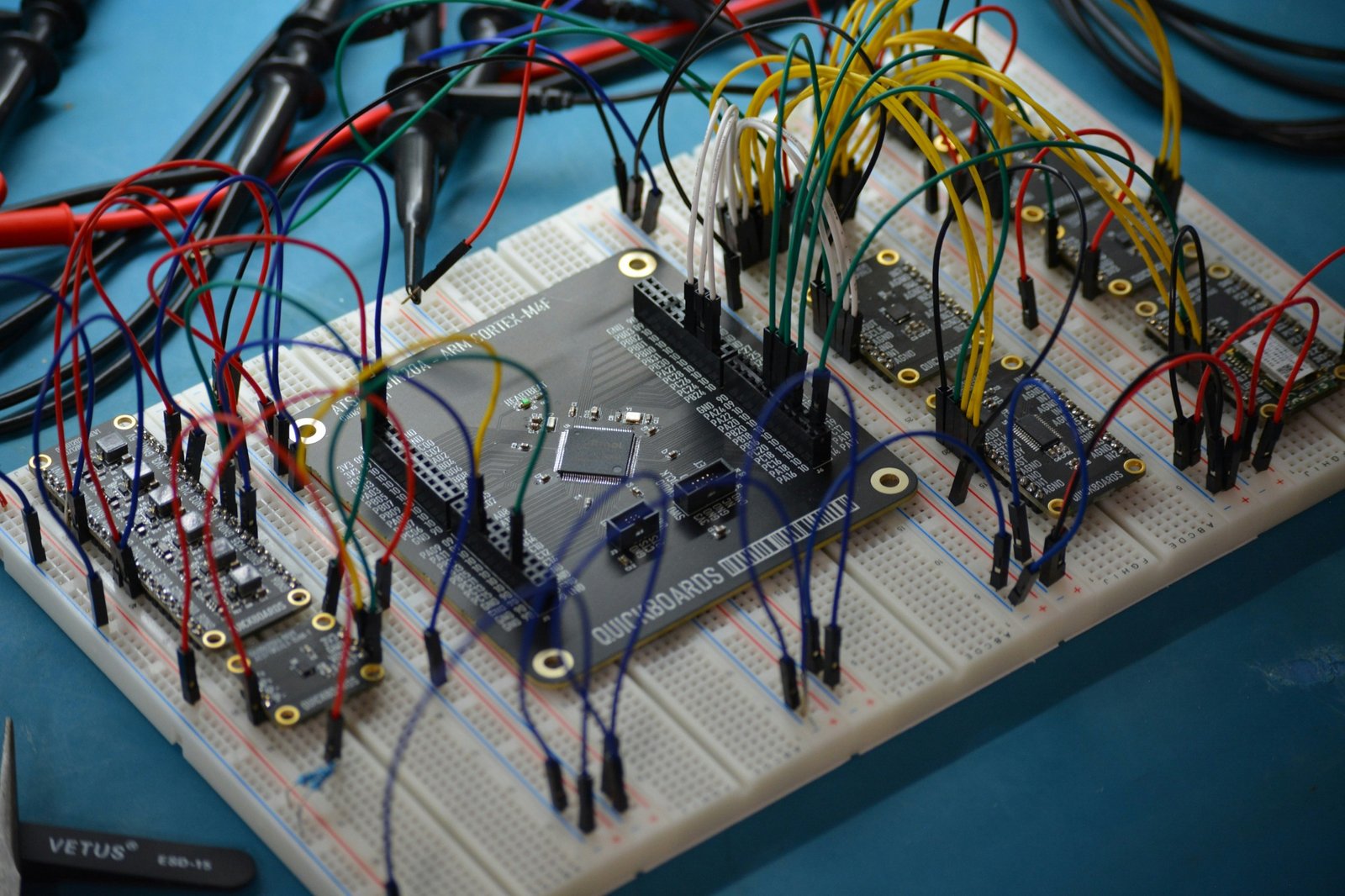
In the competitive landscape of industrial hardware design, the difference between a profitable product and a financial drain lies in the initial design phase. Many startups focus solely on functionality, but neglecting production expenses is a costly mistake. By utilizing professional PCB design services focused on “Design for Manufacturing” (DFM), companies can significantly lower their overhead. Strategic choices in industrial hardware design solutions for manufacturing ranging from layer stack up to custom circuit board design can streamline production and reduce material waste. Optimization is the key to ensuring your professional hardware design hits the market at a sustainable price point without sacrificing the quality of your electronics.
A core pillar of PCB design services is maintaining proper clearances to prevent solder bridging and short circuits. By ensuring components suit automated pick and place machines, a hardware design services provider reduces the likelihood of manual intervention. This proactive approach significantly increases the first pass yield, ensuring that high volume runs remain cost effective and free from defects that plague unoptimized layouts.
When you seek industrial hardware design, the primary goal is to minimize “scrap” defective boards that must be discarded due to manufacturing errors. Effective DFM analysis identifies potential failure points such as acid traps or insufficient annular rings before the fabrication process begins. By catching these issues early, the best hardware design company saves you thousands in wasted raw materials and fabrication time.
Even for complex IoT hardware design services, respecting tight tolerances results in higher production stability. Professional designers use advanced software to simulate signal behavior, ensuring that high speed traces are routed efficiently without requiring expensive board revisions. This level of precision is essential for maintaining the integrity of industrial hardware design solutions in miniaturized devices.
A common mistake in circuit board design is over engineering the board’s structure without a functional requirement. Expert PCB design services for IoT devices analyze signal integrity to see if a 6-layer board can be optimized into a 4-layer design. Reducing the layer count is one of the most direct ways to slash fabrication costs without compromising the performance of the professional hardware design.
Choosing standard materials like FR-4 over exotic high-frequency laminates can save a fortune in bulk orders. This is vital when seeking cost effective hardware prototyping services online where material availability dictates the lead time. Professional designers help you select the most affordable materials that still meet the thermal and electrical requirements of your specific electronics project.
Whether it is embedded hardware design for automotive systems or consumer goods, material efficiency is a primary driver of ROI. Automotive designs require higher glass transition temperatures to withstand engine heat, yet cost effectiveness remains a priority. Designers focus on hardware prototyping solutions that use automotive grade components without over-specifying the surrounding board materials.
Hardware costs are heavily influenced by the individual price and availability of components. During the custom hardware design phase, it is vital to choose components that are widely available across multiple vendors. Relying on “sole source” parts can lead to catastrophic production delays and price gouging if a single supplier runs out of stock.
Professional hardware prototyping for electronics involves auditing the BOM to replace specialized, high cost parts with generic equivalents. Designers look for multi functional ICs that can replace several discrete components, reducing the total part count. This simplification not only lowers the component cost but also reduces the time required for assembly.
By utilizing hardware prototyping solutions, you can test these cost saving measures before committing to a full production run. A “Pre Production” prototype allows you to verify that the substituted components perform as expected in real world conditions. This stage is critical for ensuring that industrial hardware design solutions are actually ready for the rigors of a factory environment.
The time it takes to assemble a board is a direct labor cost. Industrial hardware design with components on both sides requires two passes through the reflow oven, essentially doubling the assembly time and increasing the risk of thermal damage. Whenever possible, PCB design services should aim for single sided placement to keep the production line moving quickly.
Integrating “Design for Test” (DFT) features such as accessible test points for flying probe or ICT fixtures allows for rapid, automated testing. This is crucial for custom circuit board design for industrial applications where manual testing is too slow and prone to error. High test coverage ensures that every board leaving the factory is functional.
Identifying faults during the assembly process prevents the shipping of faulty units and protects your brand. By including visual markers and clear silk screen labeling, designers help technicians quickly diagnose assembly errors. This level of detail in embedded hardware design ensures that the “rework” rate remains low, further driving down the total cost of ownership.
Q: How much can PCB design services save?
A: Strategic optimization through DFM can reduce total manufacturing costs by 15-30% through improved yield, optimized layer counts, and significantly reduced assembly time.
Q: Is affordable custom hardware design for startups reliable?
A: Yes, as long as the design emphasizes standard components and proven layout techniques. Reliability is a result of smart engineering and adhering to industry standards rather than just price.
Q: What is the role of IoT hardware design services in cost?
A: They help integrate antennas and sensors efficiently, ensuring that connectivity doesn’t add unnecessary layers or expensive specialized materials to the board stack up.
Q: Why is industrial hardware design more expensive?
A: It requires higher durability and precision to survive harsh environments, but optimized industrial hardware design solutions mitigate these costs through manufacturing efficiency.
Reducing manufacturing costs is not about reducing quality; it is about smart, intentional engineering. By leveraging PCB design services that prioritize efficiency, material selection, and strategic sourcing, you can create a robust product that is commercially viable. Investing in optimization today ensures your production remains fast and profitable.