Board Bring-Up & Debugging

Bring-up, debug, and stabilize new embedded hardware.

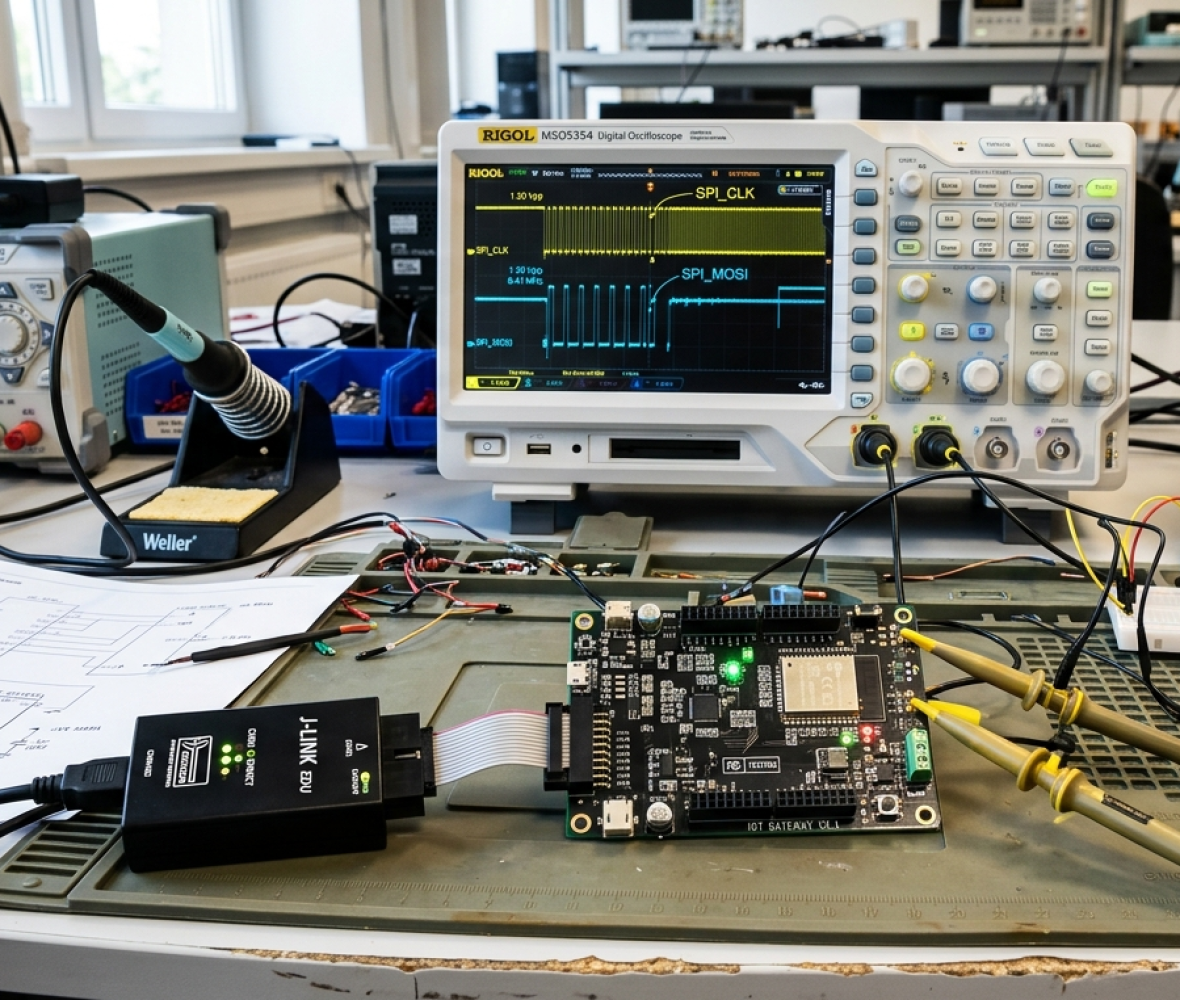
We help hardware teams bring new PCBs to life: power rail checks, flashing and debug setup, MCU/peripheral validation, firmware/hardware fault isolation, and release support.
01
Tech Stack
STM32 ESP32 Nordic nRF Silicon Labs EFR32 Zephyr RTOS FreeRTOS ESP-IDF nRF Connect SDK Simplicity SDK J-Link SWD UART I2C SPI ADC Timers Logic Analyzer Oscilloscope

New hardware rarely works perfectly on the first power-up.

A new PCB can fail because of power sequencing, wrong pin mapping, clock setup, boot configuration, soldering issues, peripheral wiring, firmware assumptions, or a small schematic mistake. We help find the real cause quickly and get the board to a stable working state.

Services

01
First Power-Up & Rail Validation
check input supply, regulators, current draw, reset behavior, boot mode, and obvious hardware faults before deeper firmware work.
02
Flashing & Debug Setup
configure SWD/JTAG/UART, programmer/debugger, bootloader path, logs, reset lines, and reliable firmware flashing.
03
MCU & Peripheral Bring-Up
validate GPIO, UART, I2C, SPI, ADC, timers, sensors, displays, radios, and board-specific pin mapping.
04
Firmware / Hardware Fault Isolation
isolate whether an issue is caused by firmware, schematic, layout, soldering, timing, power, or wireless behavior.
05
Stability, Power & Release Support
fix boot loops, resets, brownouts, high current, unstable peripherals, and prepare the board for prototype or production testing.
Problems We Solve

When a new board does not behave like the design said it should.

The board powers up but does not boot. The debugger cannot connect.

UART logs are missing. A sensor does not respond on I2C. Current draw is higher than expected.

A radio works on one revision but fails on the next. These are the problems we help isolate and fix.
Our Process

How we approach board bring-up

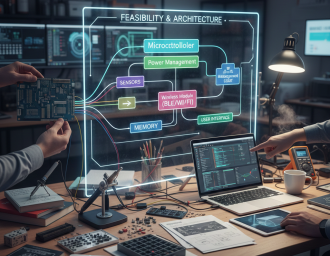
We start with the hardware files, firmware state, and failure symptoms.

Then we check power rails, reset/boot behavior, debug access, clocks, logs, and peripheral signals.

Once the issue is reproduced, we isolate whether the cause is firmware, hardware, timing, power, or assembly, then fix it in small testable steps.
Expected Outcome

From unknown failure to a working board

The result is a board that boots, logs, flashes, communicates with its peripherals, and has clear next steps for remaining issues.

You get cleaner firmware setup, verified hardware behavior, documented findings, and fewer unknowns before the next prototype or production build.
FAQs

Questions teams usually ask before working with us

01
What is board bring-up, and when is it needed?
Board bring-up is the initial testing process of powering on a newly fabricated PCB, configuring clocks/power lines, flashing bootloaders, and ensuring the chip successfully talks to all onboard peripherals.
02
Can you debug an existing or non-functional PCB?
Yes. We use equipment like oscilloscopes, logic analyzers, power profilers, and JTAG/SWD debuggers to locate electrical faults, short circuits, or incorrect signal states.
03
Can you troubleshoot hardware and firmware issues together?
Yes. Because we work in both hardware and firmware engineering, we quickly isolate whether a bug is caused by a hardware design flaw, power noise, or software driver code.
04
Can you work with boards designed by another engineering team?
Yes. Many of our clients come to us with prototypes designed elsewhere; we review their design assets, onboard the project quickly, and begin troubleshooting.
05
Can you identify and fix issues causing unstable or unexpected device behavior?
Yes. We diagnose random crashes, bus contention (I2C/SPI/CAN), memory corruption, thermal shutdown issues, and intermittent power drops to restore system stability.