
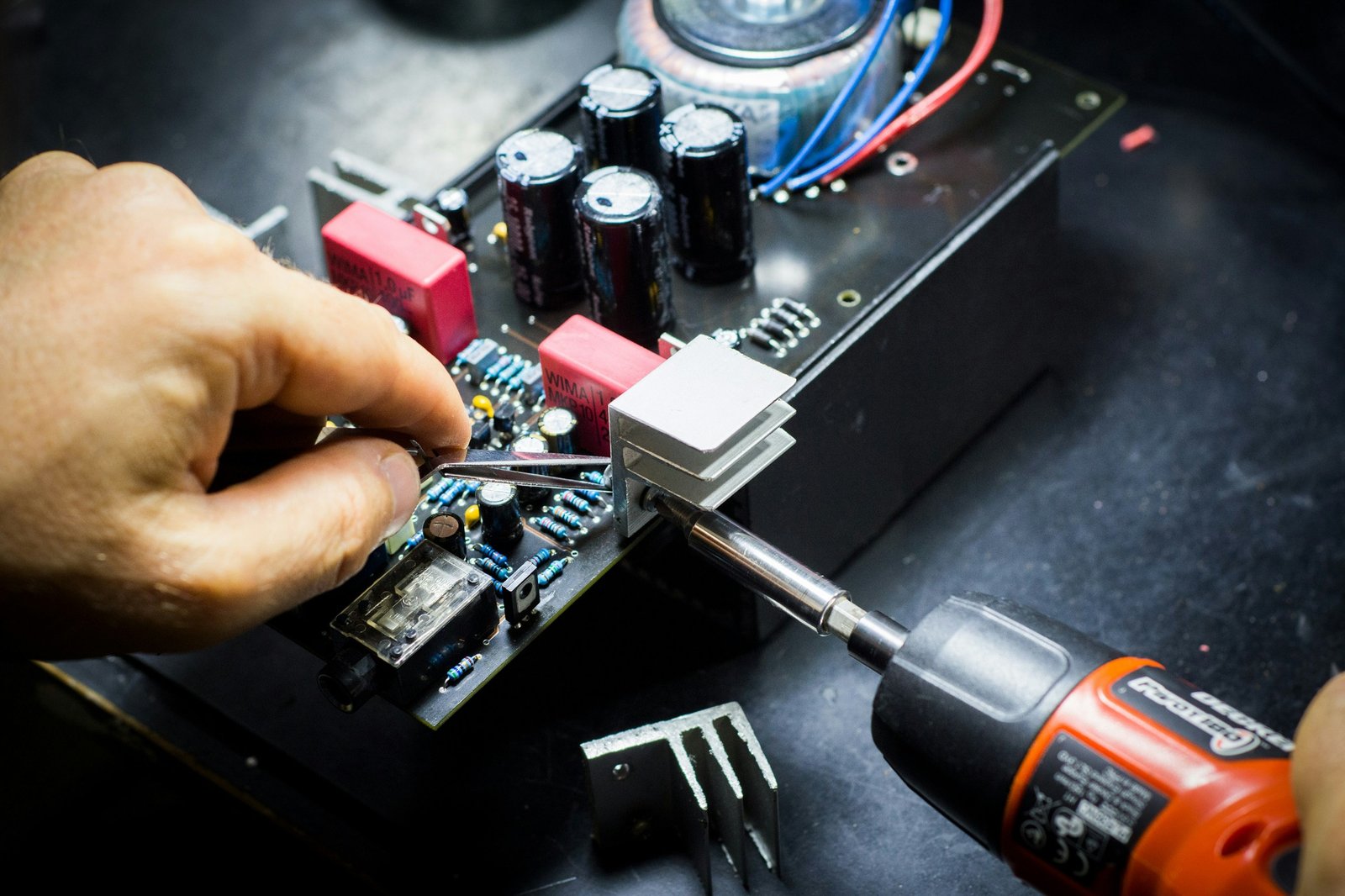
The “hardware first” mentality is a relic of the past. Today, the value of a product lies in its intelligence, connectivity, and longevity all of which are driven by software. Whether you are looking for firmware development services for a consumer gadget or real time software development for industrial automation, selecting the right partner requires looking deep into their engineering DNA.
The right embedded software company doesn’t just write code to meet a spec; they act as a co architect, helping you navigate the delicate balance between power consumption, memory constraints, and high performance execution. “2026 Shift” toward intelligent, secure edge devices.
1. Technical Mastery: Beyond Just C and C++
When evaluating embedded software development services, technical proficiency is the baseline. However, “technical mastery” in 2026 extends far beyond basic syntax.
The Low-Level Foundation
The ultimate goal of web design is to convert visitors into customers and foster meaningful engagement with your brand. By strategically placing calls to action (CTAs), creating compelling content, and incorporating interactive elements such as videos and animations, you can guide users through the conversion funnel and encourage them to take desired actions, whether it’s making a purchase, signing up for a newsletter, or contacting your team.
Building Brand Identity and Trust
A professional embedded software solutions provider must demonstrate an intimate understanding of the hardware software interface. This includes:
- Microcontroller (MCU) & Microprocessor (MPU) Expertise: Look for teams with deep experience in ARM Cortex-M/A, RISC-V, and specialized SoCs from vendors like NXP, STMicroelectronics, and Texas Instruments.
- Real Time Operating Systems (RTOS): For mission critical tasks, the company must be fluent in real time software development using platforms like FreeRTOS, Zephyr, or QNX. They should understand deterministic behavior ensuring that the system responds to inputs within microseconds, every single time.
- Bare Metal vs. Embedded Linux: Does your project need a lean, bare metal implementation for a low power sensor, or a full Yocto based embedded Linux stack for a complex gateway? The best developers can advise you on which path minimizes your Bill of Materials (BOM) while maximizing performance.
Modern Language Adoption: Rust and Python
While C and C++ remain the industry standards for firmware development services, the best companies are now adopting Rust for its memory safety features, which virtually eliminate common bugs like buffer overflows. Additionally, they should use Python for rapid prototyping and automated testing frameworks, ensuring faster time to market.
2. Industry Experience and Regulatory Compliance
Custom embedded systems are rarely “general purpose.” A company that excels at building embedded system design for smart toys may lack the rigor required for medical devices or automotive industries.
Sector-Specific Nuance
- Industrial Automation: In industrial automation, reliability is king. Your partner needs experience with industrial protocols like Modbus, EtherCAT, and PROFINET, and an understanding of embedded software for industrial automation that can survive electrically noisy environments and 24/7 duty cycles.
- Medical & Healthcare: If you are developing a wearable or a diagnostic tool, the company must follow ISO 13485 and IEC 62304 standards. They must prove they have a “Quality Management System” (QMS) that documents every line of code for FDA or CE certification.
- Automotive & Robotics: For advanced embedded software development for robotics, look for expertise in ROS 2 (Robot Operating System) and functional safety standards like ISO 26262 (ASIL ratings).
Cybersecurity-by-Design
In 2026, security is no longer an “add on.” A professional firmware development partner must implement Hardware Root of Trust (RoT), secure bootloaders, and encrypted firmware over the air (FOTA) updates. If they cannot explain their threat modeling process, they are a liability to your business.
3. The Full Lifecycle: From Design to Long-Term Support
A common mistake is choosing a company that only writes code, leaving you stranded when it comes to hardware integration or long term maintenance.
Hardware-Software Co-Design
The best embedded software developers participate in the embedded system design phase. They can tell you if a specific chip choice will make the software unnecessarily complex or if a different sensor could save 20% on battery life. This “co design” approach prevents the dreaded “throw it over the wall” syndrome between hardware and software teams.
Testing, Validation, and Lab Access
Embedded development requires physical testing. Ask your potential partner:
- Do they have an in house lab with logic analyzers, oscilloscopes, and climate chambers?
- Do they use Hardware in the Loop (HIL) testing to simulate real world conditions before the software ever touches the final PCB?
- What is their strategy for IoT software development testing how do they simulate thousands of concurrent connections to the cloud?
Longevity and Maintenance
Embedded products often stay in the field for 10+ years. Your contract should include a plan for long term firmware development services, including security patches and support for hardware revisions as components go End-of-Life (EOL).
4. The 2026 Edge: AI, IoT, and Scalability
Today’s professional embedded software solutions must be “future proof.” This means moving beyond simple “sensing and sending” to “processing and deciding.”
Edge AI and TinyML
We are seeing a massive shift toward advanced embedded software development for robotics and smart devices that process data locally. Your partner should have experience in Edge AI, optimizing neural networks to run on resource constrained MCUs (TinyML). This reduces latency and cloud costs while improving privacy.
IoT and Cloud Integration
For IoT software development, the software on the device is only half the battle. The company must understand how to securely bridge the “edge” to the “cloud.” This involves expertise in:
- Lightweight Protocols: MQTT, CoAP, and LwM2M.
- Cloud Stacks: Seamless integration with AWS IoT Core, Azure IoT Hub, or Google Cloud IoT.
- Connectivity: From cost effective IoT solutions for small businesses using Wi-Fi/BLE to long-range industrial solutions using LoRaWAN or NB-IoT.
Scalability for Startups and Enterprises
Whether you need affordable embedded software services for startups to build an MVP or a high scale deployment for a global utility, ensure the company’s process can scale. A “one man shop” might be cheaper, but a structured firm offers the redundancy and documentation necessary for growth.
FAQ: Selecting an Embedded Software Partner
Q: Why shouldn’t I just use a general software outsourcing company? A: General software companies often lack the specialized knowledge of hardware constraints (interrupts, memory management, power sequencing). This leads to inefficient code that drains batteries, causes system hangs, or fails under real world physical stress.
Q: How do I verify the quality of their firmware? A: Ask for their coding standards (e.g., MISRA C or CERT C). Request a sample of their documentation and ask about their automated CI/CD (Continuous Integration/Continuous Deployment) pipeline for embedded targets.
Q: What is the typical cost for custom embedded systems development? A: Costs vary wildly based on complexity. However, cost effective IoT solutions usually balance initial development with long term maintenance. Avoid the “cheapest” quote, as hidden costs in debugging and hardware redesigns usually far outweigh the initial savings.
Q: Does the company own the IP (Intellectual Property)? A: This is critical. For professional embedded software solutions, you should own the source code and all related documentation. Ensure the contract explicitly states that all work for hire IP is transferred to you upon payment.
Q: Can they help with hardware prototyping? A: Many top embedded software developers have partnerships with PCB layout houses or in house hardware engineers. This “one stop shop” approach for embedded system design significantly reduces communication errors and speeds up the development cycle.
Conclusion
Choosing an embedded software company is a foundational business decision. The right partner acts as the bridge between your hardware vision and a reliable, scalable product. By prioritizing technical mastery in real-time software development, insisting on industry specific compliance, and ensuring a full lifecycle partnership, you mitigate the risks inherent in hardware-centric projects.
In 2026, the “best” company isn’t the one that just writes code it’s the one that builds a secure, intelligent, and lasting ecosystem for your devices.
